Table of Contents
You didn't get to where you are by sitting in a classroom with twenty strangers, working through a textbook chapter by chapter. You got here by being strategic, efficient, and relentlessly focused on what matters.
So why would you learn German that way?
Every year, thousands of international executives relocate to Vienna, Salzburg, or Graz and sign up for a group German course. Most of them quit within three months. Not because they lack discipline—but because the format is fundamentally wrong for who they are and what they need.
This article is about why that happens, and what actually works instead.
The executive's dilemma
If you're a senior professional learning German in Austria, you're facing a problem that most language schools don't acknowledge: your situation is unlike anyone else's in the room.
You don't have two free evenings a week. Your schedule shifts constantly—board meetings, international travel, last-minute calls with headquarters. A fixed Tuesday-and-Thursday class at 18:30 is a fantasy.
Your level is hard to place. Maybe you picked up conversational German years ago. Maybe you're fluent in certain contexts—ordering in restaurants, making small talk at a Heuriger—but completely lost in a Betriebsratssitzung. A standardized placement test doesn't capture this.
And the content you need doesn't exist in any curriculum. You don't need to learn how to book a hotel room. You need to learn how to chair a meeting in German, how to push back diplomatically in a negotiation, how to give feedback to a direct report in a way that lands with the right weight.
This is the executive's dilemma: you need the most specialized form of language training, but the market offers you the most generic.
Why group courses fail for leaders
Let's be direct about what happens in a typical B2 group course:
The pace is wrong. Group courses move at the speed of the slowest participant. If you're quick—and most executives are—you'll spend half the session waiting while someone else conjugates a verb you mastered weeks ago.
The topics are irrelevant. Textbook German revolves around everyday scenarios: at the doctor's office, at the train station, describing your hobbies. None of this prepares you for the language you actually use at work. When was the last time a textbook taught you how to say "I appreciate the initiative, but I'd like us to reconsider the timeline" in German?
The stakes are invisible. In a group course, making a mistake is low-cost. But in your professional life, how you speak German directly impacts how you're perceived. A group course doesn't train you for the pressure of real-world performance.
The environment is impersonal. You cannot practice your actual board presentation in a room full of strangers at different levels. You cannot rehearse a difficult conversation with your Austrian CFO when the person next to you is preparing for a supermarket checkout.
Group courses are designed for volume. Executive communication is about precision.
What 1:1 executive coaching actually covers
Genuine executive German coaching is not a private version of a group class. It's an entirely different discipline. Here's what it looks like when done well:
Presentations and public speaking. You bring your real slides, your real talking points. Your coach works with you on delivery, sentence structure, rhetorical pacing, and the subtle art of sounding authoritative in German without sounding stiff. You rehearse, get feedback, adjust, and rehearse again—until the language feels like yours, not a translation.
Negotiations and persuasion. German negotiation culture has its own rhythm. Directness is valued, but there are invisible boundaries. You learn the phrases that signal strength without aggression: Ich sehe das anders (I see it differently), Lassen Sie mich einen Gegenvorschlag machen (Let me make a counter-proposal), Das kommt für uns so nicht in Frage (That's not something we can accept as it stands). More importantly, you learn when to use them.
Leadership communication. How do you delegate clearly in German? How do you give critical feedback without sounding harsh—or worse, without sounding weak? How do you motivate a team in a language where warmth is expressed differently than in English? This is where coaching becomes most valuable: at the intersection of language and leadership style.
Cultural nuance. Austrian German is not German German. The indirectness, the Schmäh, the way Viennese professionals say Schauen wir mal when they mean probably not—these are things you can only learn from a coach who lives in this culture and understands the gap between what is said and what is meant.
Spontaneous speaking under pressure. Perhaps the most important skill: being able to think on your feet in German. Your coach creates scenarios—a journalist asks an unexpected question, a colleague challenges your proposal, a client raises an objection—and you respond in real time. No script, no safety net. This is where fluency is actually built.
How to choose the right coach
Not every German teacher is equipped for executive coaching. Here's what to look for:
Business experience or understanding. Your coach should understand what a P&L review looks like, what happens in a supervisory board meeting, what "stakeholder alignment" means in practice. If they've never worked in or with corporate environments, they'll struggle to meet you where you are.
Focus on communication, not just grammar. Grammar matters, of course. But at the executive level, the real challenge is pragmatics: how to say the right thing, the right way, at the right moment. Your coach should spend more time on impact than on conjugation tables.
Flexibility and discretion. Your schedule changes. Your coach should adapt without penalty. And what you practice in sessions—your upcoming presentations, your internal challenges—should stay confidential. This is not a classroom. It's closer to a professional sparring partnership.
Cultural competence. If you're working in Austria, your coach should know Austrian business culture intimately—not just the language, but the unwritten rules, the social codes, the things no textbook will ever teach you.
Results you can expect
Executives who commit to structured 1:1 coaching typically experience a shift within three to four months. Not fluency—that takes longer—but something more immediately valuable: confidence.
You stop avoiding the German parts of meetings. You start contributing. You notice that your Austrian colleagues respond differently when you address them in their language—not perfectly, but intentionally. Doors open that you didn't know were closed.
Within six months, most executives report that German has moved from being an obstacle to being an asset. They chair meetings. They give short presentations. They handle small talk at company events without reverting to English after the first sentence.
Within a year, the best-case scenario: German stops being something you do and starts being something you are—at least in your professional context. The gap between your English self and your German self narrows. And that narrowing is where real leadership presence begins.
The KLARER approach
At KLARER, our Executive Coaching is built for exactly this profile: senior professionals who need German that works in boardrooms, not classrooms.
Every engagement begins with a detailed analysis of your role, your communication challenges, and your goals. Sessions are scheduled around your calendar—not the other way around. Content is drawn from your real professional life: your emails, your presentations, your meetings.
It's not a course. It's a partnership designed to make your German as sharp as your leadership.
Interested? Get in touch for a free initial consultation and find out how KLARER's 1:1 Executive Coaching can work for you.
Ready for the next step?
Book a free trial lesson and experience the KLARER method.
Book a session now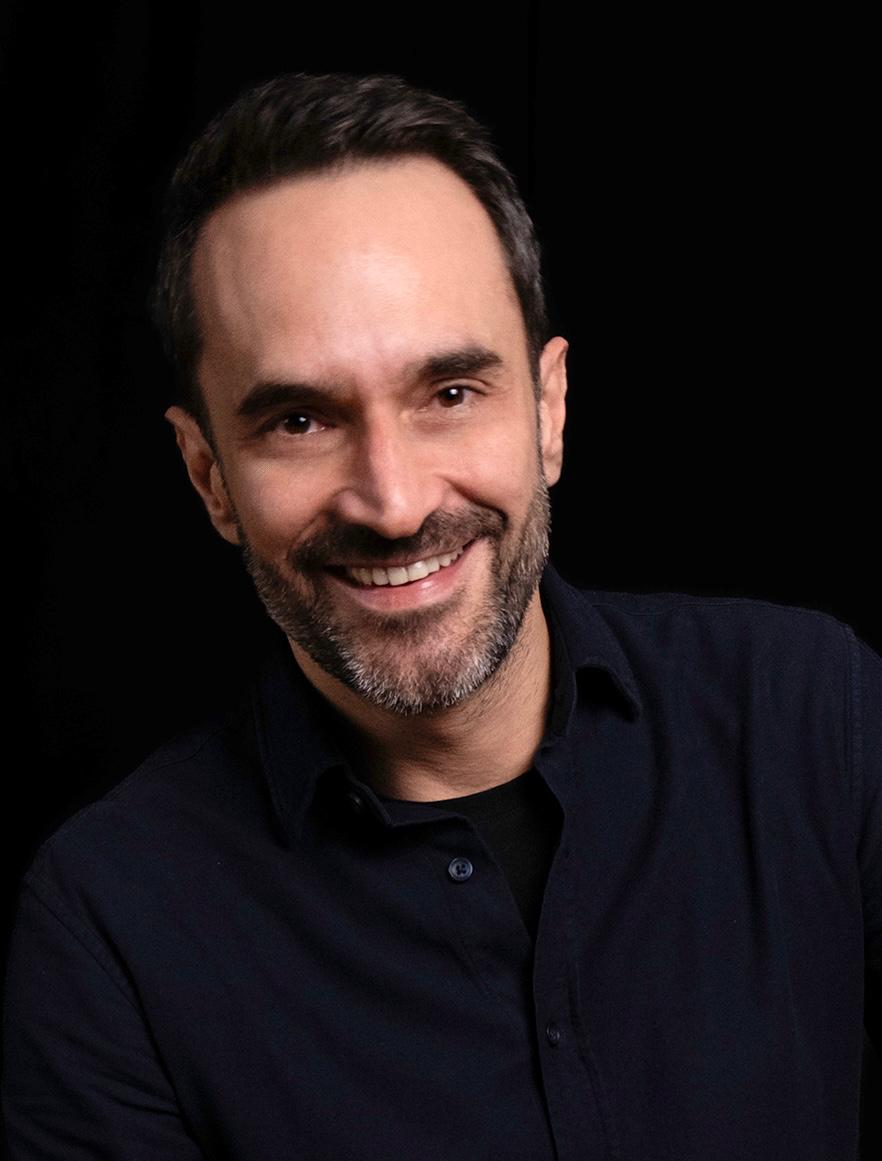
About the Author
Bernd
Business German Trainer & Executive Coach
20+ years of leadership experience in the international tourism industry, complemented by professional acting training. Specialisation: Business German B1–C1, Executive Presence and rhetoric.
More about our team →